[November 18, 2025]
Autonomy for the World: DT25
The threat environment today is evolving faster than ever. Small, agile drones have become tools of both reconnaissance and destruction, demanding rapid, autonomous counter-unmanned aerial systems (C-UAS) solutions that can think and respond accordingly. Foiling these modern threats requires unique systems of outstanding unmanned aerial systems (UAS) and mission autonomy, able to adapt at rapid speed.
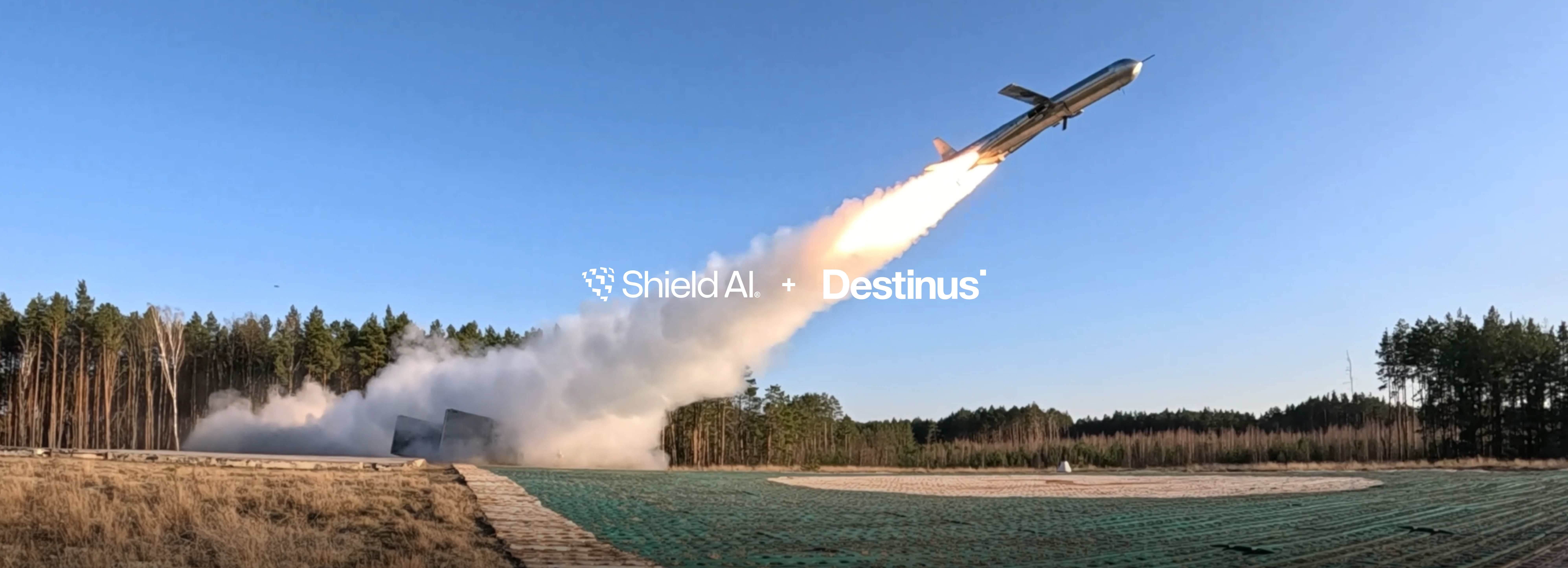
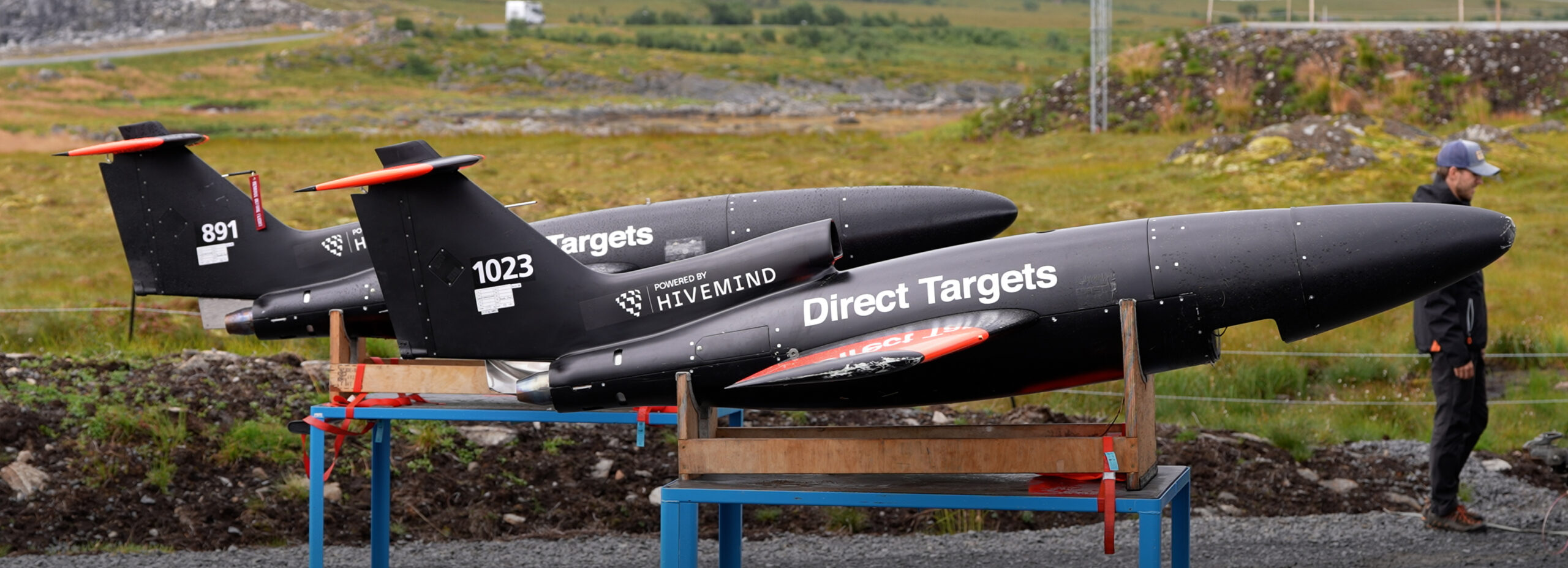
On the 13th and 14th of August in Andøya, Norway, Shield AI and Airbus Defence and Space brought that type of C-UAS solution to life. Hivemind, Shield AI’s AI-powered autonomy software that enables unmanned systems to conduct complex missions in GPS- and comms-denied environments, autonomously flew the Airbus DT25, a low cost, high performance aerial target drone platform. Powered by Hivemind, the DT25 autonomously detected, tracked, and pursued a live-flying adversary (red agent) aircraft at the edge of the operating area without human input. The closed loop system — continuously sensing, reasoning, and acting — enabled us to identify and respond to the airborne threat, creating a powerful C-UAS capability.
From early concept discussions in March to first flight in mid-August, Shield AI and Airbus transformed the Airbus DT25 from a testbed into a proof point for rapid autonomy integration. In less than six months with only two prior ground tests, the successful integration of Hivemind on the DT25 demonstrated that strong partnership driven by agile software and a proven platform can compress timelines for modern solutions.
This case study outlines how Shield AI and Airbus:
- Rapidly expanded Hivemind onto the DT25, delivering autonomous flight capability within a compressed schedule.
- Built a digital test environment using Airbus simulators to validate safety features and mission logic before flight.
- Advanced a low-cost, high-performance C- UAS concept on a jet-driven platform.
- Tuned Hivemind precisely to the DT25, enabling composed, adaptive flight behavior under real-world conditions.
- Cultivated a “coalition of the willing” between Airbus and our team, blending deep hardware support, agile software development, and a motivation for rapid iteration.
Technical Integration: Fine-Tuning Our Autonomy
In March 2025, we embarked on a collaborative mission with Airbus to integrate Hivemind with Airbus’ DT25 to autonomously track a red agent in both permissive and degraded environments. In doing so, we’d be able to combine our state-of-the-art software with Airbus hardware to simulate a C-UAS mission profile, which is an urgent need on today’s battlefields. After establishing the design reference mission, we got to work on early technical shaping. When export approvals cleared in late April, we finally had clearance to get hands-on. That moment turned months of planning into real engineering.
The DT25’s autopilot was new to us. Although heading, speed, and altitude (HSA) interface would have been optimal for this mission profile, waypoint control was the available integration path given the compressed timeline. To adapt, we rethought how Hivemind expressed intent: instead of issuing direct HSA commands, it “spoke” in spatial goals the aircraft could interpret. This required precision and trust in data, not major code rewrites.
We built a digital test environment that let us learn quickly and fail safely. Airbus provided an autopilot simulator and a scriptable ground control system, which we containerized for repeatable missions and fault injection. Without a hardware-in-the-loop setup, this became our proving ground. We validated geofences, altitude and airspeed protections, and mode transitions while simulating network latency and radio delays.
The automatic target recognition (ATR) system from Airbus linked Hivemind to the tactical mission. It enabled perception and reaction but created a new dependency: the better the tracking, the smarter the control. When ATR confidence dipped or radio latency spiked, Hivemind had to maintain safety while holding position on the target. To stabilize performance, we fused inertial measurement unit (IMU) data with radio-based positioning and applied latency-compensated filters that kept the system steady even when inputs were unreliable.
The result was an autonomy stack tuned precisely to the DT25. It handled imperfect data with composure and adapted naturally when conditions changed. The process felt less like software installation and more like hands-on craftsmanship.
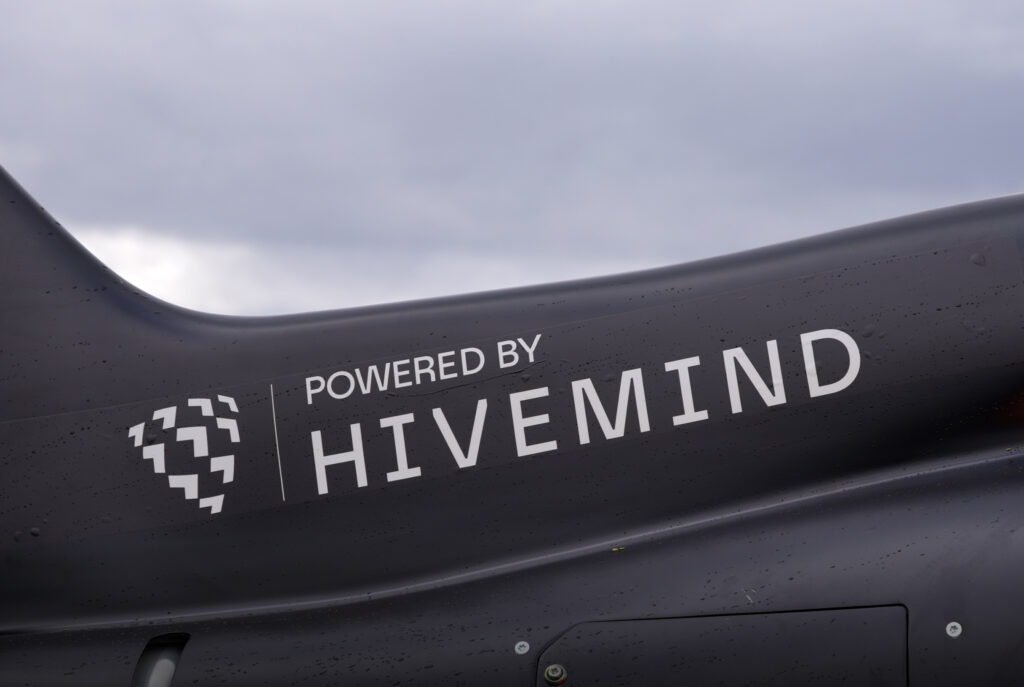
Taking Flight: DT25 Powered by Hivemind
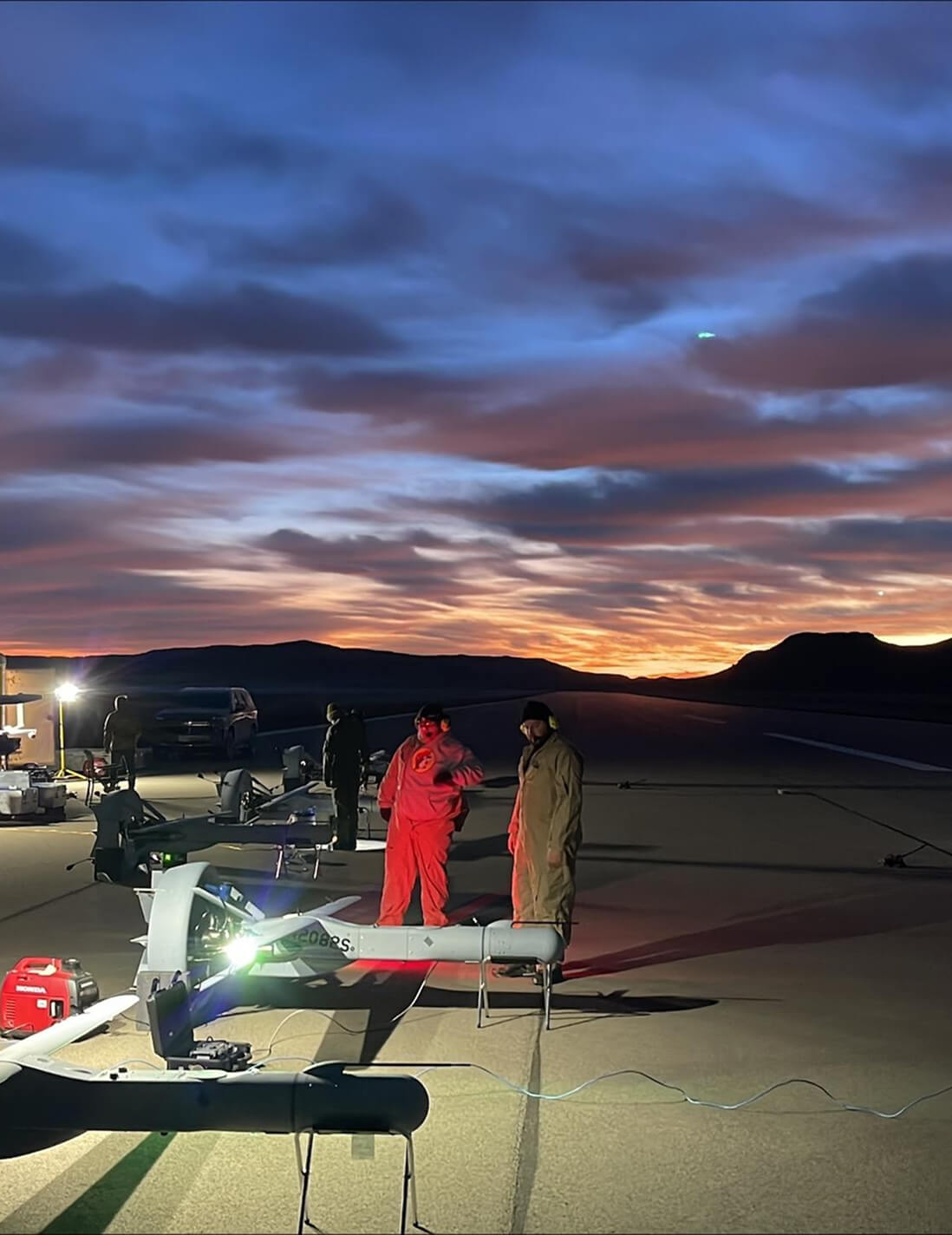
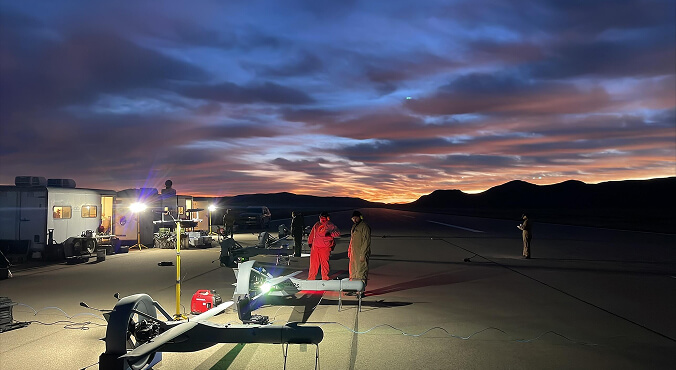
We held two major ground test events before flight. The first, in late June, focused on system validation — proving Hivemind could fly, navigate, and stay within all limits. The second, in late July, tested timing and communications under stress. Each day produced data, and every night that data drove refinements.
By mid-August, we had confidence backed by evidence, and it was time to take flight. In August, the DT25 flew autonomously for the first time. The scenario was intentionally difficult: a red agent executed evasive maneuvers while the ATR tracked it and Hivemind continuously planned intercepts. Simulated jamming forced fallback positioning when the target slipped from view.
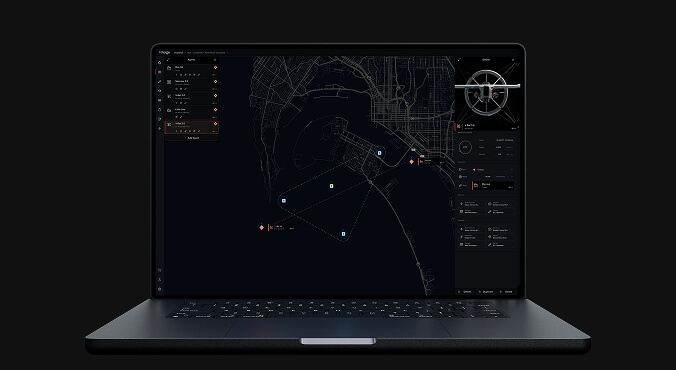
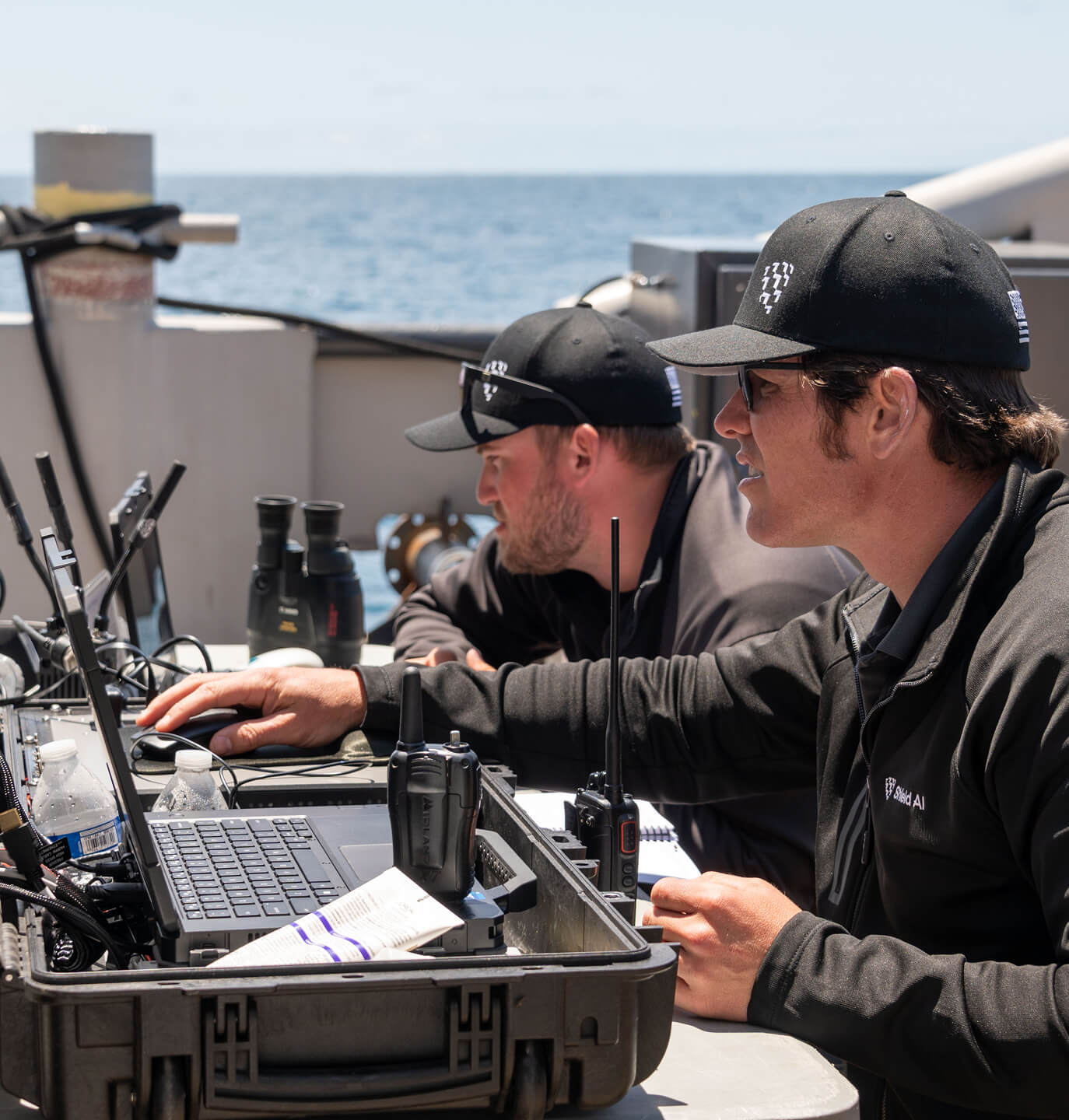
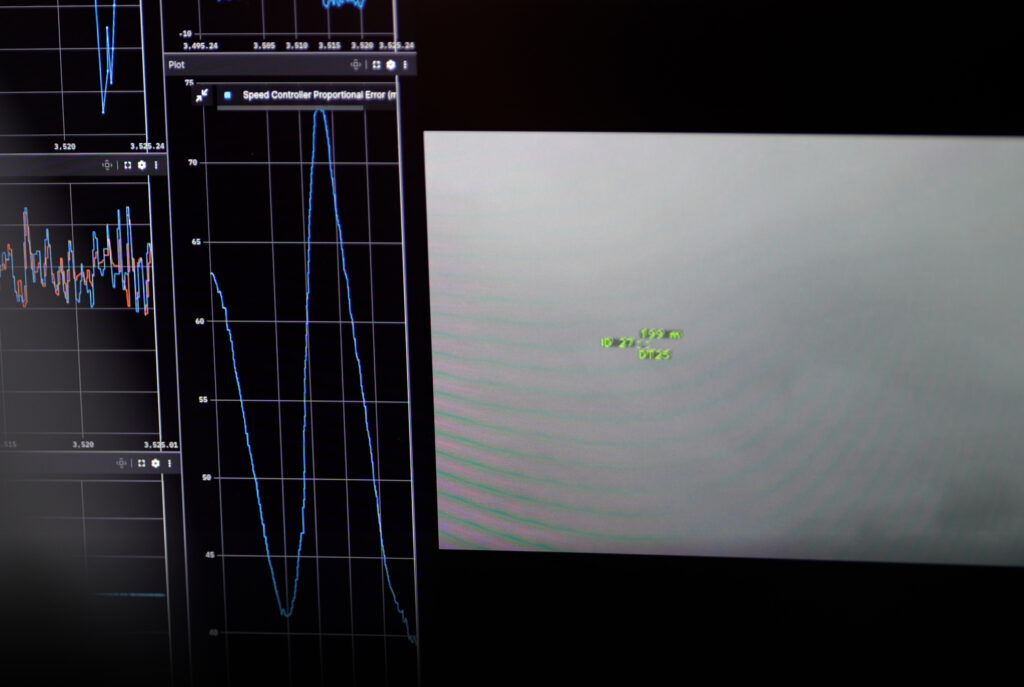
From the ground, operators watched telemetry and video feeds with ATR overlays showing what the autonomy saw. When ATR confidence fell, Hivemind adapted, switching to fallback tracking, maintaining safe flight, and holding a defensive posture until conditions improved. That composure under uncertainty is what defines operational autonomy.
Every minute in the air validated months of simulation. We saw how latency propagated through control loops, how tracking geometry shaped timing, and how real conditions challenged lab assumptions. Flight testing transforms theory into reality; every second of telemetry tells the truth.
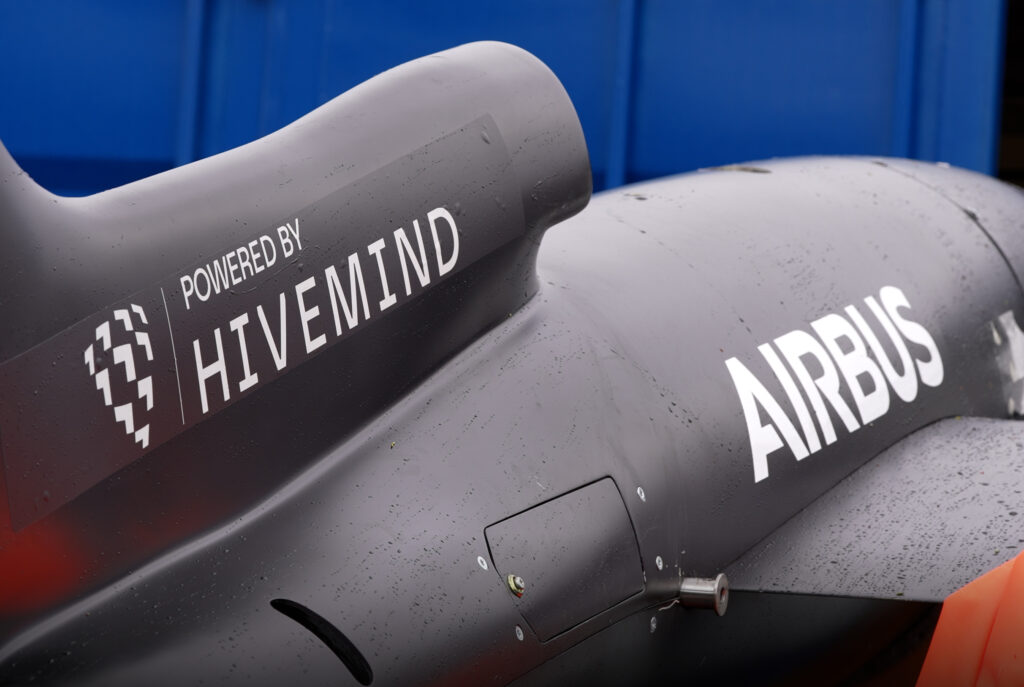
A Coalition of the Willing: Collaboration with Airbus
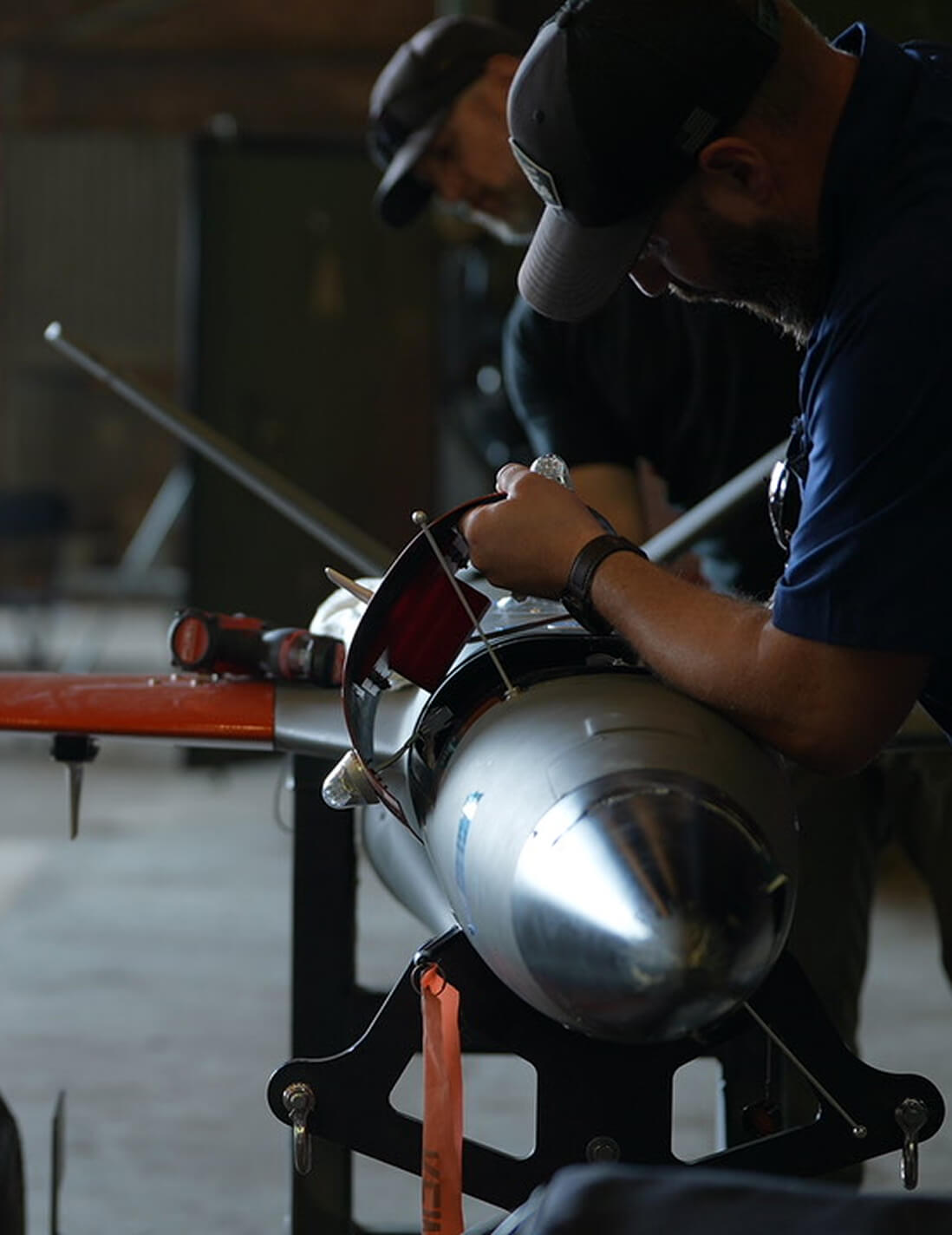
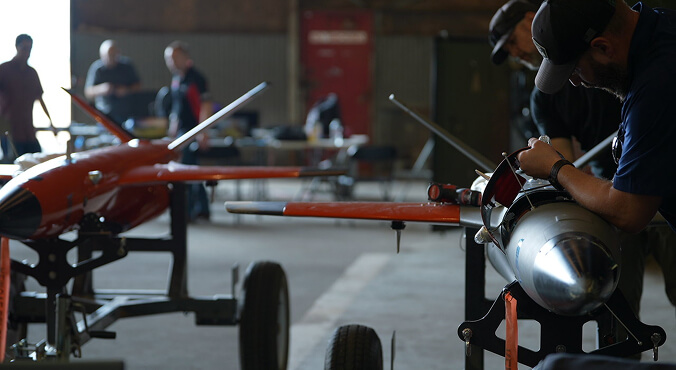
No integration effort or flight test succeeds without what I often call a “coalition of the willing”: a team committed to supporting one another in every way necessary. Airbus was a cornerstone of that coalition, playing a critical role in accelerating integration and ensuring success. From day one, their team went above and beyond, providing access to simulators, the autopilot stack, the ATR solution, range and test infrastructure, and, of course, the drone itself — which enables agile prototyping, driven by Airbus’ philosophy to “fly fast, learn fast.”
Working with the DT25 drone, Shield AI and Airbus have shown how fast and agile prototyping can be. Comparable flight tests typically take more than a year to prepare, but by mastering both the hardware and software in detail, the teams proved that far more agile solutions are possible together. This collaboration is a model for how established and emerging industry partners can achieve remarkable results in a short timeframe — and there’s more to come!
But Airbus’ support went far beyond technical contributions. Even with their own demanding workloads, the Airbus engineers and program leads remained engaged, proactive, and deeply collaborative. Complementing Airbus’ contribution, our team brought the autonomy software, integration experience, and a motivation for rapid iteration. Our team was small, yet driven to succeed, fostering a culture where teammates stepped up to wear multiple hats. Each engineer brought not only deep technical experience from the field but also innovative ideas for integrating Hivemind safely and efficiently.
Each new platform introduces unique aspects, from its interface to its control system. Some unexpected challenges inevitably appeared: circumventing difficulties in feeding and processing radio-based position data, learning how Airbus’ ATR solution works, and navigating shipping delays. But those problems were solvable because both teams worked transparently. Airbus’ generosity in resources, combined with our team’s adaptability, forged a mission that simply refused to fail.
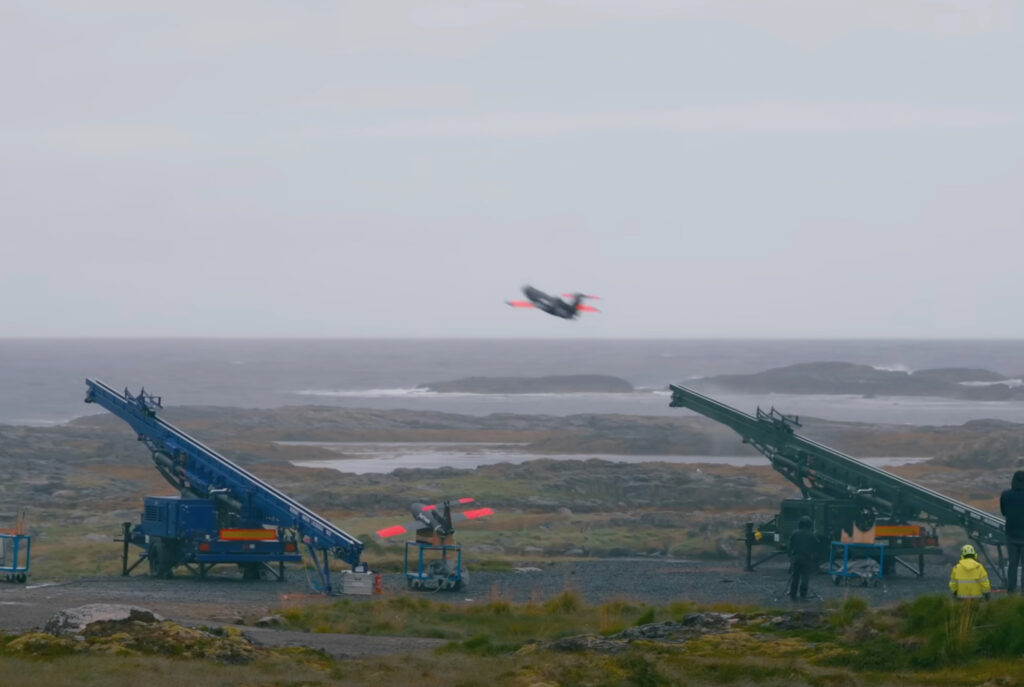
Beyond the Flight Test: Practical Applications
When looking to future goals of the partnership and the evolution of autonomy, flight tests are pivotal to understanding how a solution works and fine-tuning it.
Each hour of flight testing delivers far greater insight and progress than hours spent in simulation or lab environments. As we move forward, we’re pursuing more realistic adversaries, whether they’re surrogate targets or the real thing, to push our systems in authentic conditions. These flight tests will continue to inform how we pursue rapid integration and autonomous flight. One day, not far in the future, these insights will lead to a modern, operationalized C-UAS capability in the battlefield.
Looking back, the success of DT25 was not luck or heroics. It was engineering discipline executed with urgency and partnership. We did not just integrate autonomy onto a drone; we integrated two companies into one team that built, tested, and flew faster than anyone thought possible.
About the Author
Bryan Doyle is a principal engineer of Hivemind Solutions at Shield AI, where he leads teams to develop and integrate Hivemind autonomy software onto new platforms. Before joining Shield AI, Bryan spent nearly twenty years working in deep technical roles across space and defense efforts, including manned space programs. He holds a Bachelor of Science from the University of Central Florida. In his free time, Bryan enjoys traveling, volunteering in his community, doing home projects, and serving on the board of a local school.
This blog is part of a series of case studies highlighting the unique challenges and accomplishments of integrating Hivemind on each platform it has flown. Each installment delves into the technical innovations, collaborative efforts, and mission successes that define our work and our teams.