[October 29, 2026]
X-BAT for Europe: A Conversation with Former RAF Typhoon Pilot Andrew “Geeky” Hawkes
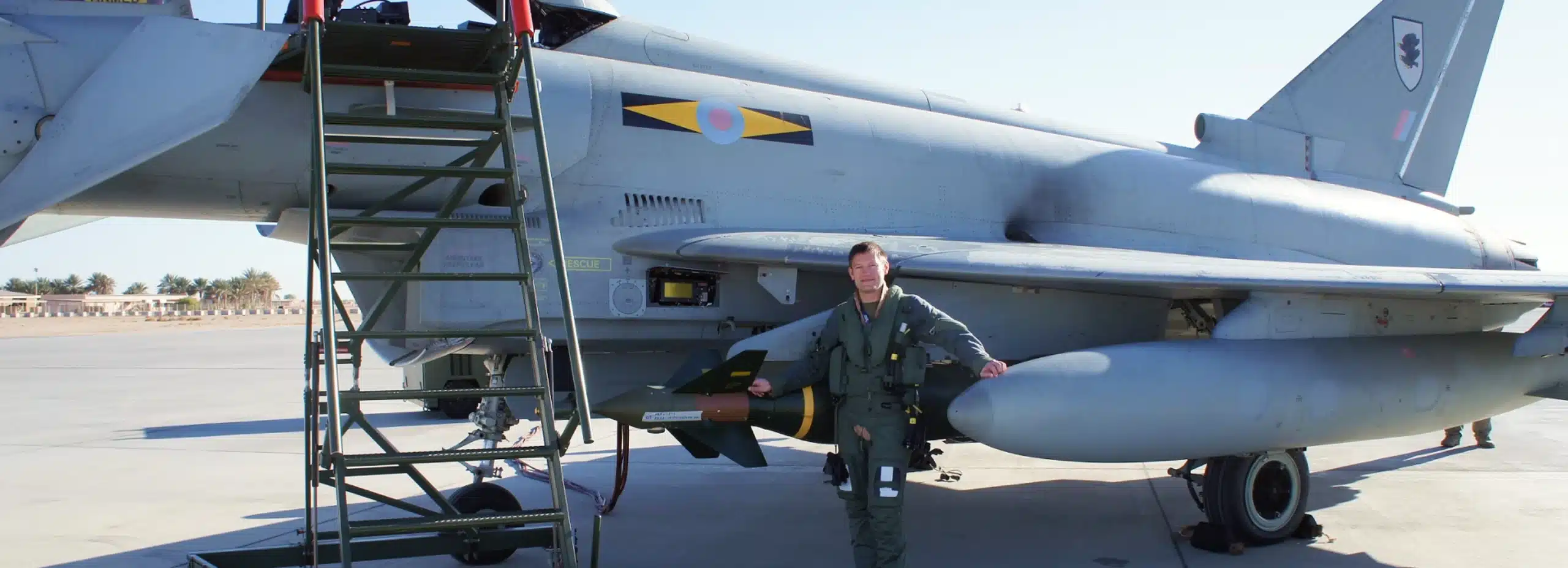
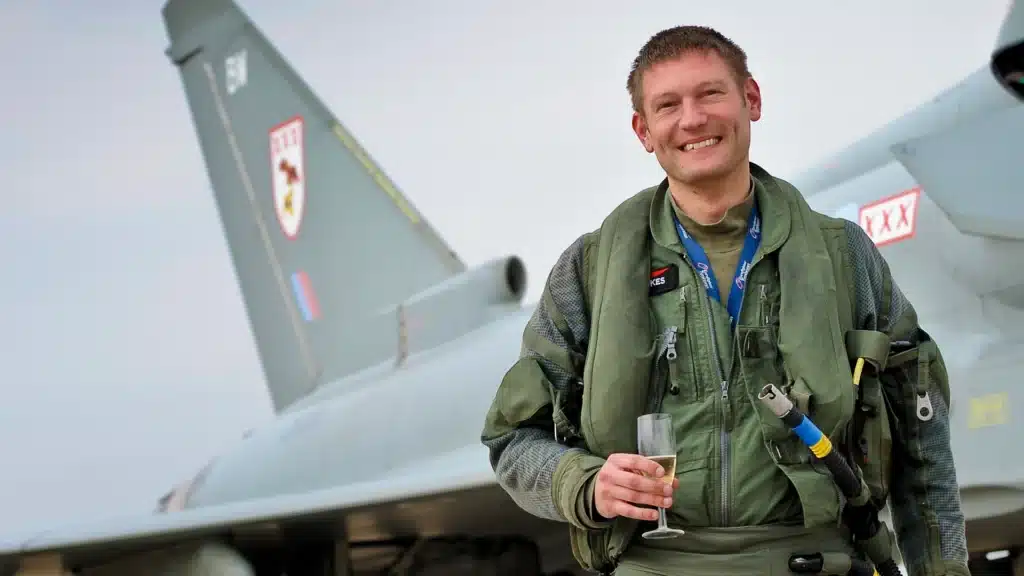
Andrew “Geeky” Hawkes knows what it takes to bring a new combat aircraft into service. As one of the first-ever Royal Air Force pilots to train and fight on the Eurofighter Typhoon, he helped introduce cutting-edge capabilities and develop tactics for the force.
At Shield, he’s known to his colleagues almost exclusively as Geeky, a callsign he earned by being “massively computer literate” and quickly mastering the Typhoon’s technical details. Over time, he’s grown to embrace the moniker. “We live in a world where geeks are cool, I think.”
Today, he draws on years of operational experience and time in the defence industry to lead European campaigns for Shield’s X-BAT, the world’s first vertical takeoff and landing autonomous strike fighter.
We sat down with Geeky ahead of the International Fighter Conference (IFC) to discuss the operational needs shaping his interest in X-BAT, the development progress he has seen firsthand, and how Shield is building an enduring presence in Europe.
Q: Could you tell us a bit about your military background?
I joined the Royal Air Force (RAF) in 2001. I was lucky enough to get selected to go to Canada as part of my flying training, and then returned to the UK and was selected to fly the Typhoon. It was pretty exciting – I didn’t really know what I was getting myself into then with a brand-new aeroplane and everything that comes with bringing a new capability into service.
I spent a lot of time helping to develop Typhoon tactics and flying operationally, including in support of Operation Unified Protector in Libya. Later I was selected to go through advanced weapons training and then actually teach the weapons course. I closed out my RAF time as an Operational Test pilot, bringing new capabilities into Typhoon.
Q: What came after your military service?
After the Air Force, I moved to Saudi Arabia to help establish the First Typhoon Combat Squadron in the Royal Saudi Air Force.
I then spent [nearly a decade] in industry. It was interesting from a technical point of view, but things could be slow. Eventually, I became frustrated with the pace.
Around the same time, the Collaborative Combat Aircraft (CCA) market was becoming quite fashionable. I understood how CCAs fit with US [concept of operations], but I didn’t see the operational relevance for Europe. I remember telling my wife, “I don’t want anything to do with that. Not interested.”
Then I had a chance encounter with someone from Shield based in Europe. I was lamenting the CCA concepts I was seeing, and he told me Shield had something more exciting coming. Then he showed me a video of X-BAT and I thought, “I have to go there. I have to do this job.”
Q: What makes X-BATs so compelling from an operator’s perspective?
X-BAT has got so much utility across the export landscape. It isn’t something that only makes sense in just one geography. The range is game-changing. There are very few countries that have enough air-to-air refuelling assets. Nobody has enough tankers. But X-BATs range allows you to be operationally relevant everywhere, and you’re not reliant on scarce [tanker] assets to go and execute the mission.
The other piece is something I took from my own experience with Typhoon. When we first flew [in combat], it was in an air-to-air only role. After literally less than a month and we went like “we have to carry some bombs on this platform, otherwise we are not going to be operationally relevant.” So I’ve seen time and again you must have strike assets, and if you don’t, you are not really that useful. X-BAT brings that strike power to the fight.
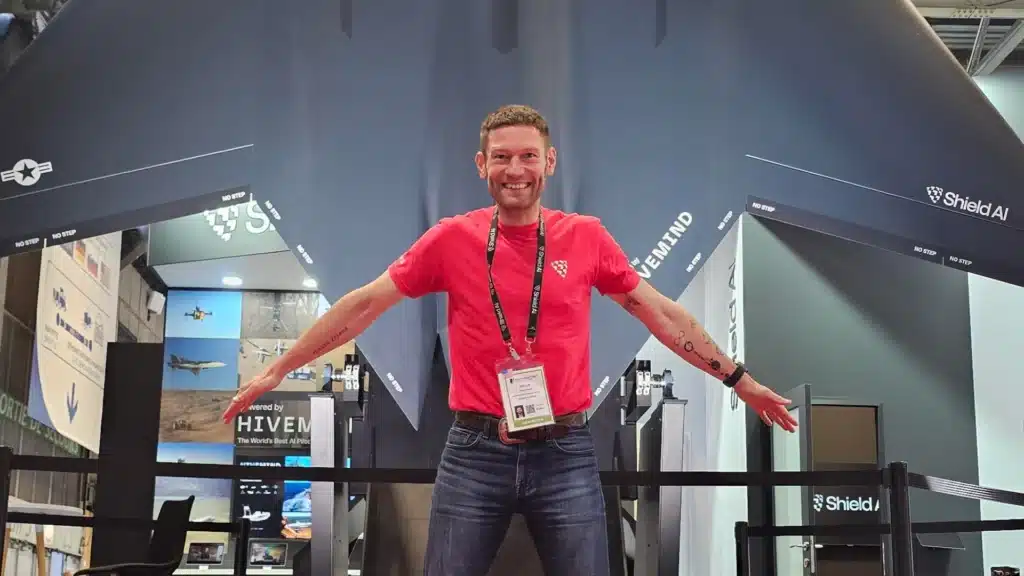
Q: You mentioned not being too pleased with the pace of development in some of your previous roles in industry. How have you found the pace at Shield?
I think the best way to describe it… I first visited [the X-BAT development facility in Frisco, Texas] in January as part of my induction, and I walked around and there was kind of a tatty bit at the back of the factory where people were like ‘this is where we’re building X-BAT’ and I thought, OK, cool.
I went back in March and it was already kitted out and there was a hub of activity. And I was like, yeah, holy ****. From there, I was coming probably every four to six weeks, and I could meaningfully see huge leaps forwards in a development programme that anywhere else would have taken, you know, five years to get to get to that. I’m actually getting ready to head back to Frisco soon, and I have a feeling this is going to be a particularly exciting visit. I’ll leave it there for now. More to follow, but that gives you a sense of the pace.
Q: What kind of presence does Shield have in Europe?
Shield believes that you are strong by being local. We have stood up our office in London, where we’re rapidly building out both a corporate and engineering presence. We have a permanent office in Oslo and are establishing an office in Poland. Plus there are more on the way.
The point is that that strong partnerships in Europe matter to Shield. and a partnership only works if you’re present. Shield are genuinely committed to being present and as part of that, each of those offices is a cross section of the people that we see around there. So there’s a mix of Americans, Brits and others in the London office, and similarly around the globe. We’re committed. We’re wherever the customer needs us, speaking the native language and partnering with them every step of the way.
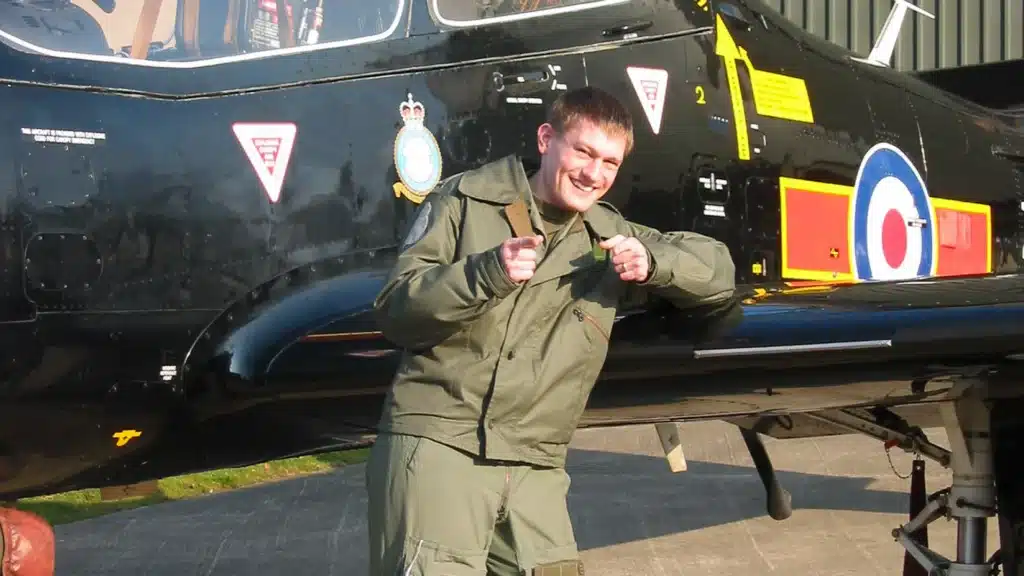
Q: What is it that you’re most excited to talk to folks at IFC about?
I want to share the commitment to making this a real programme. I think if you look at the capability enabling investments we’ve made: we’ve invested heavily in [our flight testing facility in] Newton, Kansas, making sure we can support ongoing development. We’ve announced X3 [X-BAT production facility] in Seattle, which shows we’re already thinking about the scale that’s required to produce the aeroplane for our international customer base as well.
We know what we have today to get the full capability that’s required for our US customer, but we’re committing in other areas so that we can scale, produce, be available for export. There are international customers from the outset, and I think that shows a maturity in thinking of what we want to achieve for X-BAT. A vertical take off and landing autonomous fighter jet is cool, but if you can only build 1 every six months, it isn’t going to help anybody.
Q: What do people need to know about Shield?
I genuinely feel what we do matters. I care deeply about capability and making sure the war fighter has the right capability.
And so we have to make sure that people have got the right capability available to them at a meaningful time. Being part of that is pretty rewarding.
And is it hard work? Yeah, it’s a bit of hard work . But I think anything that’s worth doing is generally hard. And so you kind of just put the big boy socks on and go get after it.