[September 22, 2026]
Dark Drones Are Here. Is Our Air Defense Ready?
Author: Mich Mak, C-UAS Product Lead at Shield AI
On February 28, 2026, a Shahed-type one-way attack drone struck a radome at Naval Support Activity Bahrain, headquarters of the U.S. Fifth Fleet. No fatalities were reported, but the strike demonstrated how a relatively inexpensive UAS can damage high-value military infrastructure.
The attack also points to a broader challenge for counter-UAS teams, particularly in Ukraine and the Middle East. Adversaries are adapting their drones and tactics to make them harder to find and stop. One part of that challenge is the growing use of systems often described as “dark drones.”
Dark drones are not a distinct type of aircraft, but a term to describe UAS that are difficult to detect. These UAS may fly low or follow routes that keep them close to terrain and visual clutter. Some may also operate with limited detectable radio frequency (RF) activity, providing fewer cues for early warning.
For a counter-UAS team, an initial alert is only the start. Operators must establish and maintain a reliable track: a continuously updated picture of the object’s location and movement. They must then pass that information to a system responsible for engagement.
Tracker C-UAS was built to close this gap.
Tracker C-UAS is Shield AI’s computer vision and deep learning software that continuously analyzes video from EO/IR sensors used by counter-UAS and weapon systems. It detects hard-to-see airborne objects and maintains their tracks while helping operators distinguish drones from clutter. When paired with L3Harris’s VAMPIRE™ weapon system, it moves target information from sensor to effector with fewer manual handoffs, giving operators more time to respond.
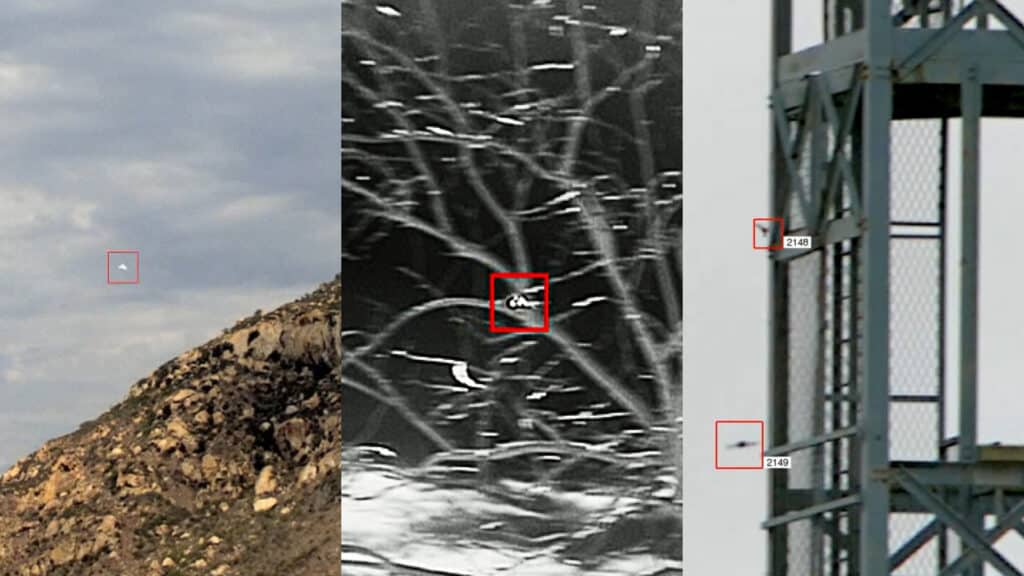
Figure 1: Examples of dark drones detected by Tracker C-UAS
Why dark drones are becoming more difficult to detect and stop
Counter-UAS teams use multiple sensing methods to identify and assess potential threats, including radar, RF detection, acoustic sensors, and EO/IR cameras. However, dark drones can be difficult to detect because they often do not present a clear or consistent signature to any one sensor. On radar, a small aircraft flying close to the ground can be hard to distinguish from terrain. If it emits little RF energy or navigates autonomously, RF sensors may not provide useful information. Acoustic detection can also be constrained by distance and background noise.
EO/IR cameras provide a passive way to visually confirm a potential threat, but raw EO/IR video does not automatically produce a usable track. A dark drone may blend into its surroundings and become harder to follow as the background changes. Without detection and tracking software, an operator searching a wide field of view may not see it immediately or may lose it in visual clutter.
When the track is lost, personnel must locate the aircraft again and confirm its position before continuing the response. That costs valuable time and shortens the window to stop the drone before it reaches a critical asset.
Pairing EO/IR cameras with detection and tracking software reduces the burden on the operator. The software can identify a potential airborne object in the video and maintain its track across a changing background. A continuous track gives the team more time to determine if the object poses a legitimate threat.
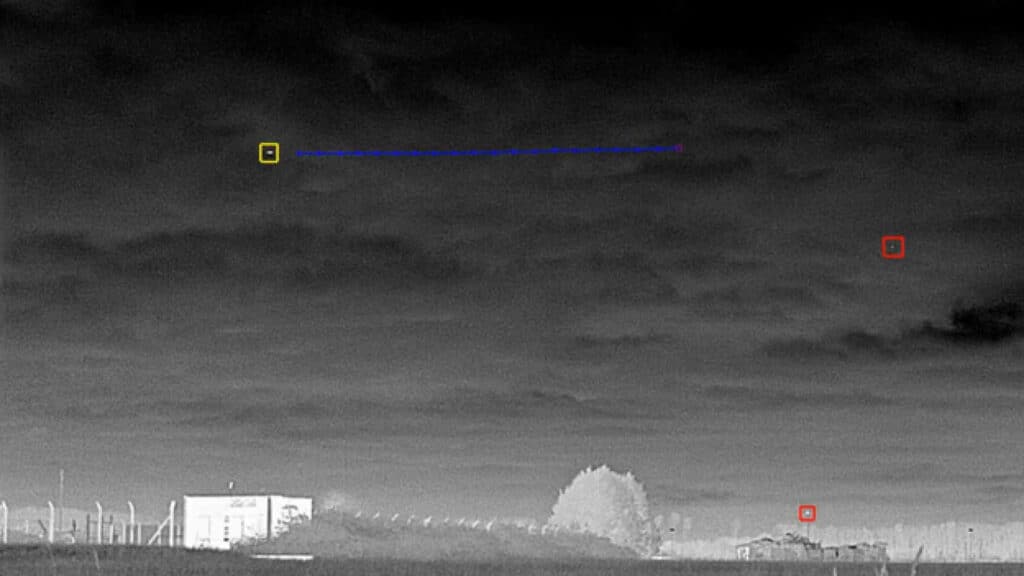
Figure 2: Tracking hard to spot drones with Tracker C-UAS
Tracker C-UAS helps operators find drones that are easy to miss
Tracker C-UAS continuously analyzes EO/IR video for airborne objects that may be difficult to spot in a wide-area feed. Shield AI has demonstrated detection of moving airborne objects as small as 2 × 2 pixels in video. At that scale, an object may be easy for an operator to overlook.
Once an object is detected, Tracker C-UAS helps the operator determine whether it is relevant by distinguishing potential drones from common airborne clutter such as birds or clouds. This reduces time spent investigating irrelevant movement and keeps the operator focused on credible threats.
After detection, the software updates the object’s location as it moves, sustaining the track through visual clutter and changing terrain. Tracker C-UAS can also geolocate the object and pass its position and direction of travel to other systems in the counter-UAS architecture.
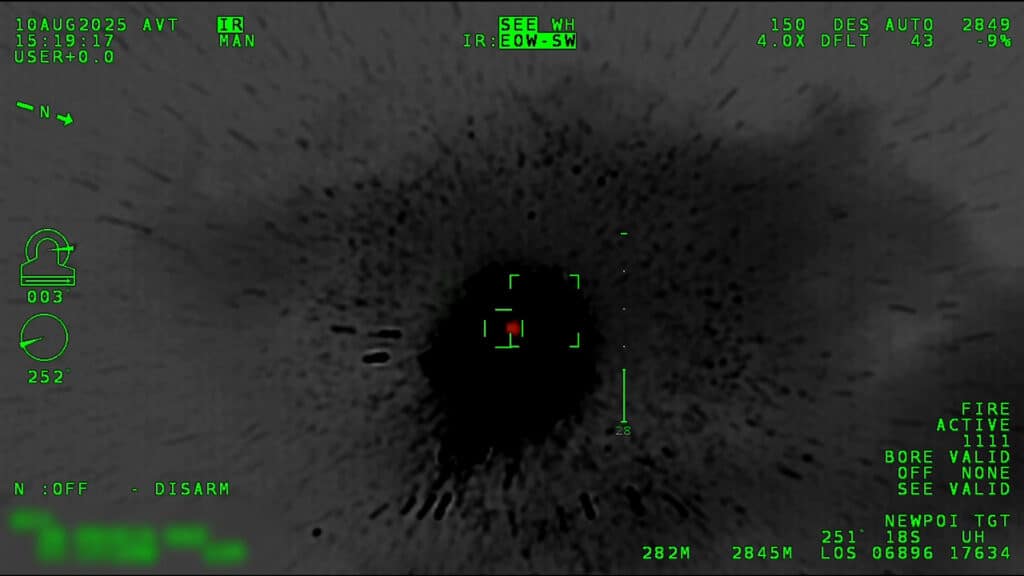
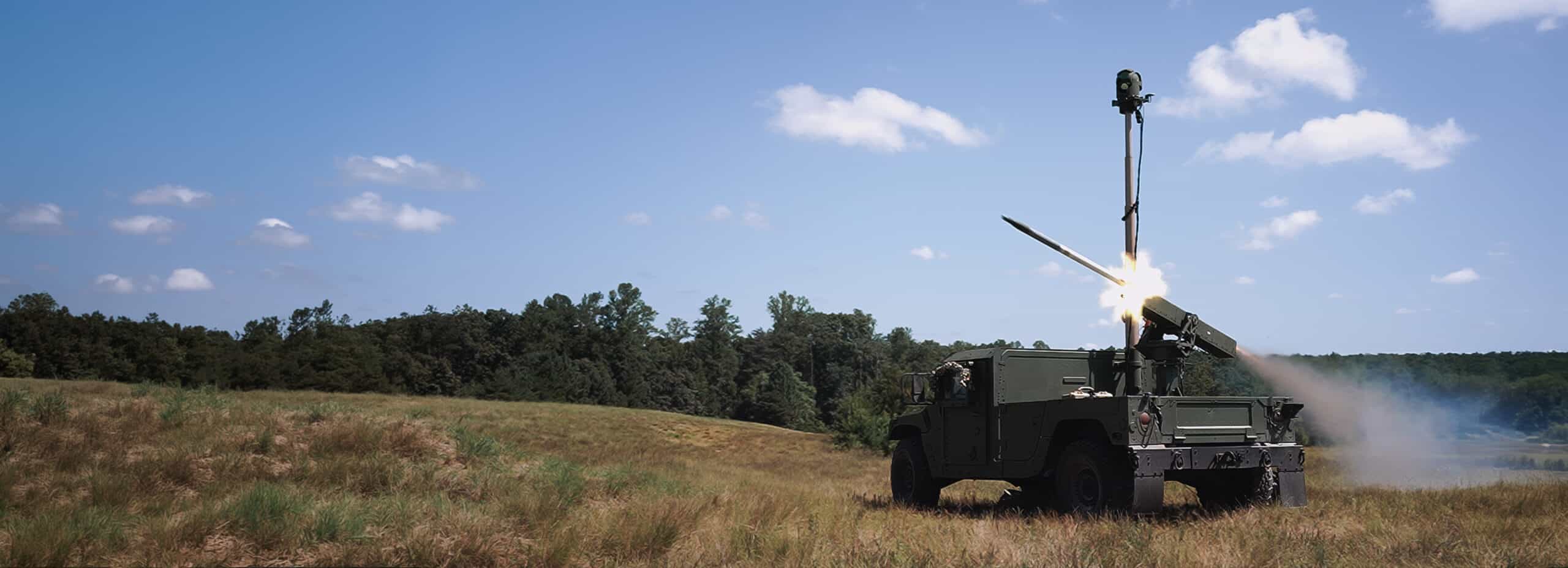
Figure 3: Strike image courtesy of L3Harris
From detection to target lock
When integrated with VAMPIRE, Tracker C-UAS maintains the track from wide-area search through target lock. Instead of manually restarting the search as the sensor zooms in, the operator can follow the same track toward an engagement decision.
Shield AI and L3Harris demonstrated this workflow using Tracker C-UAS with L3Harris WESCAM® MX®-Series EO/IR sensors aboard VAMPIRE. Tracker C-UAS analyzed the video to detect and track multiple classes of UAS, including targets partially obscured by terrain or other visual clutter. It provided high-probability cues that helped operators bring the sensor onto the target.
VAMPIRE is a modular counter-UAS system that combines WESCAM EO/IR sensors with a precision-strike capability and can employ Advanced Precision Kill Weapon System (APKWS)-guided rockets. Since 2023, VAMPIRE systems have logged more than 350,000 operational hours and shot down hundreds of hostile drones in combat, including in Ukraine.
Following the successful demonstrations, L3Harris licensed Tracker C-UAS for its VAMPIRE platform. The result is a more continuous path from initial detection through the engagement decision, with fewer manual handoffs and more time to respond.
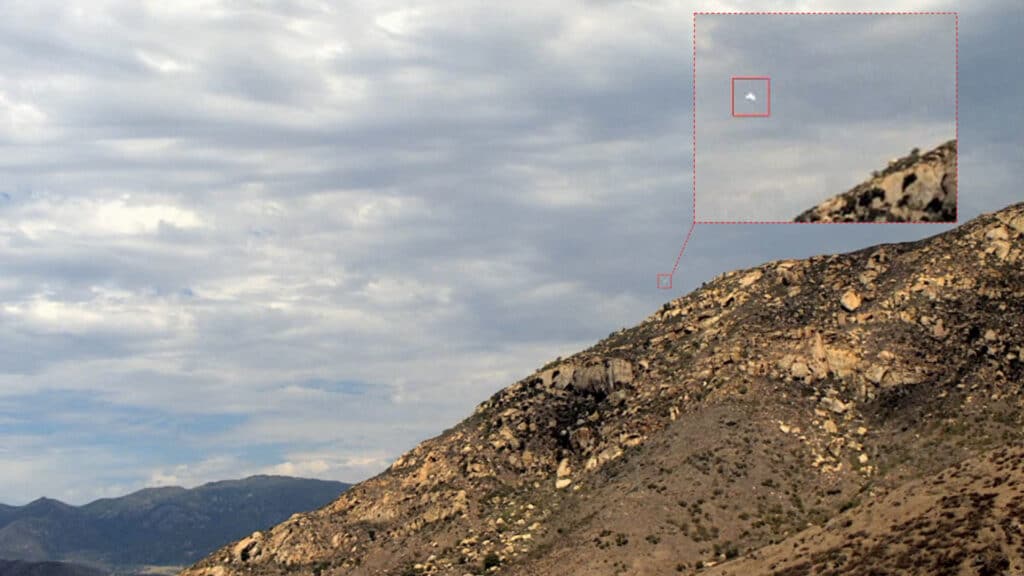
Figure 4: Dark drone flying low and close to terrain is detected by Tracker C-UAS
AI-powered perception is essential to modern counter-UAS operations
The current conflicts in Ukraine and the Middle East have shown that drone threats are changing quickly. Dark drones are one example. Their weak signatures can delay detection, while visual clutter can force operators to search again, leaving less time to respond.
Tracker C-UAS uses AI-enabled vision to detect UAS and maintain accurate tracks through challenging visual conditions. It gives operators greater confidence in what they’re seeing and more time to act, while its analytics can be refined as adversaries adopt new tactics.
The attack in Bahrain showed why air defense systems must be prepared for evolving threats. Together, VAMPIRE and Tracker C-UAS give operators the time and clarity to respond before a dark drone can strike.
Shield AI’s Vision Systems portfolio pairs AI with EO/IR sensors to help users detect, identify, and track objects in visually challenging environments. Rather than asking operators to interpret every detail in a crowded video feed, Vision Systems products continuously analyze visual data and turn it into information that supports faster, better-informed decisions.
The portfolio includes AI-powered tools for different missions:
- ViDAR detects and identifies objects across wide areas from airborne platforms.
- Tracker detects and tracks ground and maritime objects from airborne platforms.
- Tracker C-UAS detects, discriminates and tracks unmanned aircraft from surface EO/IR on C-UAS and remote weapon systems integrated into fixed surveillance posts, mobile vehicles and vessels.