Jeff Mabry recently joined Shield AI as Head of V-BAT. We caught up with Jeff to discuss V-BAT’s operational success, Shield AI’s focus on safety, and the growing global demand for the aircraft.
Can you introduce yourself and tell us a bit about your background?
I grew up as a military brat and attended the U.S. Air Force Academy because I wanted to be an Air Force pilot. I spent a rewarding 21 years in the Air Force, first as a Combat Rescue helicopter pilot with multiple deployments. After attending the U.S. Naval Test Pilot School, I worked as an experimental test pilot working on rotary-wing, fixed-wing, and unmanned aircraft. I finished my military career as the commander of a flight test organization with a mixed fleet of fixed- and rotary-wing aircraft used to develop capabilities that keep our military at the leading edge of technology. I was also lucky enough to fly around 33 different aircraft types over my career. I left the Air Force in 2014 and, after a brief period supporting government flight test programs as a contractor, I spent 10 years in aerospace startups developing new and novel aircraft. I took one of the first eVTOL aircraft, Vahana, from design through flight test, and then led the XB-1 program at Boom Supersonic, where we made history with the first privately funded civil supersonic aircraft. Right before Shield AI, I was leading Boom’s Overture airplane program, the Symphony engine program, and the Superpower industrial gas turbine program.
What attracted you to Shield AI and the opportunity to lead the V-BAT program?
After the military, my time in startups was not defense focused. I really wanted to get back to supporting our nation in a way that felt fulfilling and helping V-BAT grow beyond where it is today seemed like the perfect opportunity. Improving and scaling an existing product was also a new challenge for me, and it sounded exciting. I’ve been impressed with the talent of the people around me and their dedication to the mission – it’s not something I’ve felt outside the military, and it’s special here at Shield AI. It’s also incredibly rewarding to solve challenges daily and then see the aircraft actively used around the world. We get real-time updates from our V-BAT team supporting operations across nearly every time zone. Knowing that our work is directly impacting those on the front lines is exactly why I joined Shield.

After your first month with the team, what are your initial impressions of V-BAT and the people behind it?
V-BAT fills a critical role in the layered ISR architecture for the U.S. and our allies. Today’s battlespace has large ISR platforms – think Group 5 aircraft – that provide broad coverage but can’t operate in denied environments. We’re seeing this today in the Middle East. And they are expensive. On the other end, you have small tactical drones that offer localized coverage but lack endurance and resilience. V-BAT changes that equation. It provides persistent ISR and targeting in contested environments with a level of autonomy and resilience that larger, far more expensive platforms struggle to match. V-BAT effectively allows those systems to remain at safe stand-off distances while V-BAT operates in contested zones to identify, track, and prosecute targets. When you add vertical take-off and landing and long endurance to the mix, you end up with an aircraft that solves a lot of real-world problems for operators.
My initial impression of the team is that they move very, very fast with a deep understanding and care for our customers. Engineering is constantly refining the aircraft and developing new capabilities. Operations works around the clock with customers all over the world. Manufacturing continues to improve efficiency and is ready to scale production as demand grows. The software team is advancing V-BAT’s autonomy and intelligence and is on track to field game-changing capabilities later this year. All of it is led by capable leaders and hard-charging teams I’m proud to work with.
What impact is V-BAT making for customers and operators today?
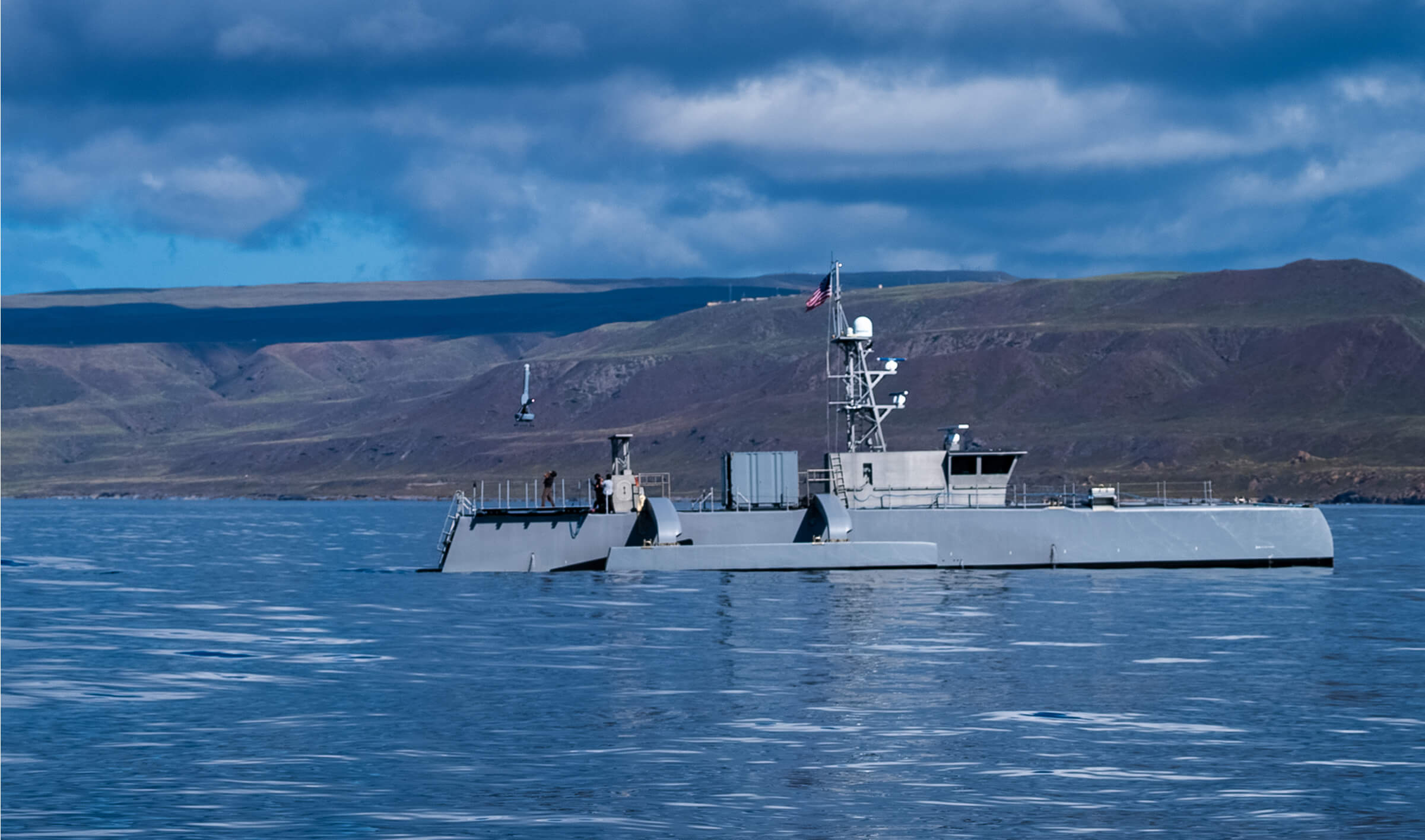
Very few systems can operate in an environment where everything – GPS, communications – is jammed. We’ve been doing it successfully for years, and we’re integrating those lessons into how the aircraft is employed around the world. V-BAT is operating in Ukraine today. The Coast Guard has been operating the V-BAT from ships to hunt contraband. Last year, they credited us with interdicting five billion dollars of drugs destined for the United States. That makes a real difference! V-BAT is also operating globally on deployments with the Japanese Maritime Self-Defense Force, the Royal Netherlands Navy, and all seven U.S. Marine Corps MEUs, among many others.

Photo from the Royal Netherlands Navy
Having worked across many different aircraft throughout your career, how does the bar on safety change with the aircraft type?
Safety is always the top priority with any aircraft. With unmanned aircraft, the focus is on the operator who works on and around the aircraft. That’s a different focus than an aircraft people are on board – keeping them safe is paramount – but it’s the same fundamental mindset. Everything is examined from a risk perspective: understand all the risks around operating the aircraft, mitigate as much as possible, and control the residual risks that remain. Aviation carries inherent risk because of the energy involved in flying vehicles and complexity of aircraft operations, so it’s our job to reduce that risk to an acceptable level. Every mishap must be evaluated in the context of aircraft and mission type, test objectives, and operational environment. It’s also worth being precise about terminology here: a mishap is any event that requires repair, involves property damage, or involves injury – it doesn’t always mean a crash, and it isn’t always something preventable. Most V-BAT mishaps result in minor aircraft damage that is quickly repaired and returned to service. That focus on safety extends well beyond the V-BAT itself. We have a rigorously audited and certified aviation and training safety program, including a 100% government audit pass rate through the U.S. Navy and six years of multi-service airworthiness certifications through the FAA and military branches.
Companies talk about a “safety culture,” and I’ve seen good and bad examples throughout my flying career. What’s been built at Shield AI falls squarely in the good category. We build it into everything we do – people are empowered to speak up, and we listen. When something goes wrong, the process is designed to understand what happened, fix what can be improved, and inoculate the lessons into every corner of the operation. And these lessons learned have translated directly into V-BAT’s operational successes. They’ve also helped us build an exceptionally reliable aircraft. V-BAT’s lifetime mission readiness rate is more than 98%, meaning it’s almost always ready to fly when our customers need it. To date, V-BAT has accumulated over 13,000 missions over many successful deployments. Our V-BAT fleet is delivering for our customers, averaging more than 10 flight operations per day globally across six continents since 2019.

As you look at the V-BAT program today, what are your top focus areas?
Three things, really. The first is reliability. Every flying vehicle needs maintenance, and the more time it spends flying rather than being wrenched on, the better – so we’re improving the aircraft in small ways that add up over time. For example, we’re currently using IR&D funding to perform an extended lifecycle testing campaign on our engine with the hopes of doubling the overhaul interval. The second is continuing to push the aircraft forward. We have a roadmap of new features that will keep the V-BAT on the cutting edge, and bringing those improvements to the field is a top priority. We’re fortunate to have multiple flying and training ranges close to our 107,000+ square foot V-BAT production facility in Frisco, Texas, where we are constantly testing the aircraft and training our operators and customers. The third is scaling. Demand for V-BAT is growing rapidly, and our job is to stay ahead of the curve. We remain focused on expanding production capacity and maintaining availability of critical payloads and spare parts. And that extends into operations and sustainment too. V-BAT is a global operation, so we must have enough operators and field service representatives to keep the aircraft flying worldwide, 24/7.
Looking ahead, what excites you most about V-BAT’s future and the role it will play for customers around the world?
V-BAT delivers a significant ISR capability comparable to much larger platforms, in a package that is resilient, affordable, and versatile in terms of payloads and its ability to launch and recover from almost anywhere. In conflicts around the world, you’re seeing the importance of lower-cost systems that deliver real capability. We have that in V-BAT today. And every V-BAT mission, from Ukraine to the Arctic, helps us innovate toward what the warfighter will need tomorrow. The future of aerospace and defense depends on being able to move fast. At Shield AI, we aren’t waiting for requirements for future capabilities to be written – we’re building those capabilities now.

Jeff Mabry, Head of V-BAT
Jeff Mabry leads the V-BAT program at Shield AI. Jeff spent 21 years in the U.S. Air Force as a Combat Rescue helicopter pilot and experimental test pilot, flying 33 different aircraft types over his career. Prior to Shield AI, Jeff amassed over a decade of experience in aerospace startups, including leading the XB-1 program at Boom Supersonic, the first privately funded civil aircraft to fly supersonic.